The Man Who Helped Make eDiscovery Make Sense ft. George Socha
June 25, 2026
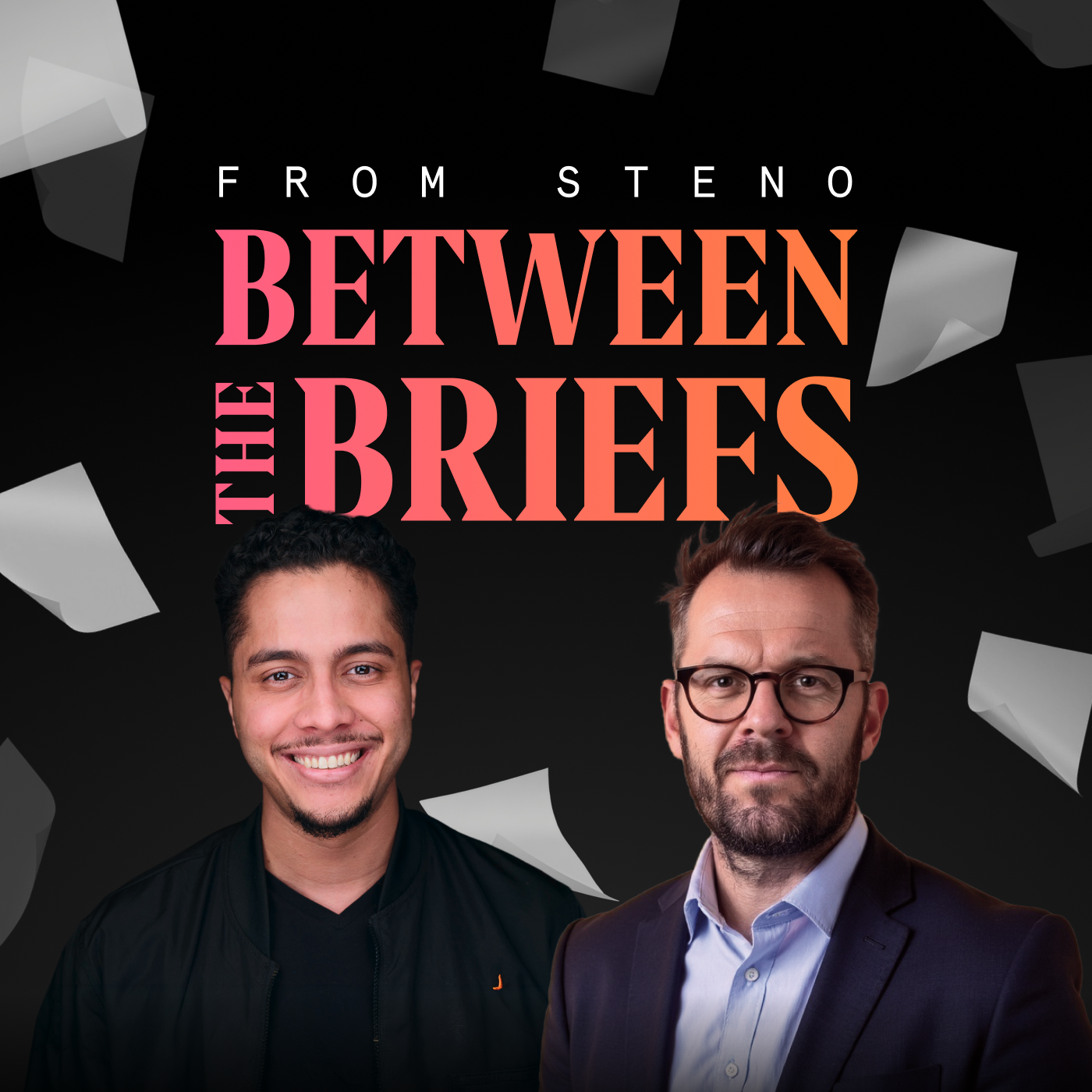
Once upon a time, George Socha was told to lose the computer because “real attorneys do not type.” Safe to say, he did not listen. In this episode of Between the Briefs, hosts Adrian Cea and Joe Stephens sit down with George Socha, Senior Vice President of Brand Awareness at Reveal and co-founder of the Electronic Discovery Reference Model (EDRM), to talk about the early chaos of eDiscovery, the framework that helped organize it and why GenAI has brought the legal industry right back to that thrilling, messy starting point. Together, they unpack why discovery is not a waste of time, why “finding everything” is the wrong goal and why legal tech is currently running at a much higher pace than people think.
Before eDiscovery had a name, George Socha was already asking the questions most of the legal industry had not caught up to yet.
In this episode of Between the Briefs, hosts Adrian Cea and Joe Stephens welcome George Socha, Senior Vice President of Brand Awareness at Reveal and co-founder of the Electronic Discovery Reference Model (EDRM), for a wide-ranging conversation on how legal technology has evolved from floppy disks and early matter management systems to GenAI, agentic tools and AI-powered discovery workflows.
What You’ll Learn:
- Why eDiscovery became an industry standard through collaboration, timing and free access
- Why liberal arts thinking matters in legal tech more than people might expect
- How GenAI and agentic AI are making eDiscovery feel new, open and uncertain again
- Why discovery is not about finding “everything,” but finding just enough to take the next step
- How AI tools like Ask can give lawyers grounded narrative answers with citations
- Why discovery is not a waste of time, but the work that gives lawyers the facts they need
- Why every AI platform may start with similar models, but the difference lies in what gets built on top
Tune in to hear why one of eDiscovery’s most influential voices believes this is the hottest moment legal tech has ever seen.
Highlights:
00:00 Introduction & Meeting George Socha
00:00 Introduction & Meeting George Socha
01:16 From Early Programming to Law School
03:03 “Real Attorneys Do Not Type”
04:07 Refusing to Lose the Computer
05:16 Building Litigation Support and eDiscovery Capabilities
06:38 How the EDRM Framework Was Created
09:04 Why EDRM Stood the Test of Time
09:31 Why Free, Collaborative Standards Won
12:24 Why Liberal Arts Thinking Matters in Legal Tech
14:28 How eDiscovery Has Changed Since the Early Days
17:56 Why This AI Moment Rhymes With Early eDiscovery
18:11 What Excites George About GenAI and Agentic Tools
20:49 The Million-Dollar Data Story Project
22:33 What Reveal Is Building with AI
23:35 How Ask Gives Lawyers Grounded Answers
28:30 The Myth of Finding Everything in Discovery
29:11 Why Good-Faith Discovery Matters More Than Perfection
33:43 The Biggest Misconceptions About eDiscovery
35:52 What Actually Differentiates AI Platforms
39:22 Can AI Improve Access to Justice?
41:58 George’s Hot Take: Legal Tech Is at a 15 Out of 10
43:16 Final Thoughts
Quotes:
- "When we started EDRM I said no way, how are we going down that path where you have to buy standards. Whatever else we do, the diagram and the content we publish around it comes at no charge to anybody. Everything wrapped around that diagram was the result of 35 people coming from law firms, corporate legal departments, service providers, and software providers, so it wasn't any one person's work or organization's work."
- "What you can learn through getting a liberal arts undergraduate education that is very hard to learn if you have a technical education focused on a specific area are really powerful critical thinking skills. The ability to stand in the shoes of others and look at things from their perspectives, and to call on foundational elements that come from any number of disciplines like philosophy, sociology, economics and history."
- "We're seeing more rapid and more extensive change now than we have ever seen. In some ways with generative AI and agentic capabilities, we are back at that same starting point again. History doesn't repeat itself but it definitely can rhyme, and we're on a rhyming stage right now where it's at the same type of open range of possibilities."
- "The area of eDiscovery that has always been of greatest interest to me is what can you do with this stuff once you've got it. We are now seeing with all of the capabilities emerging with generative AI and agentic possibilities a whole array of opportunities for lawyers to work with content to more effectively prosecute or defend a matter at far lower cost in a much compressed time frame."
- “The number one preconception is that discovery stuff is just a waste of time and money. What do you do in a lawsuit? There are two things you focus on - the law and the facts. Discovery is what gets you the facts, and if you do discovery well, you're much better placed to combine them together to reach an outcome."
Between The Briefs is handcrafted by our friends over at: fame.so