Is Not Using AI a Malpractice Risk? ft. Shannon Boettjer
July 24, 2026
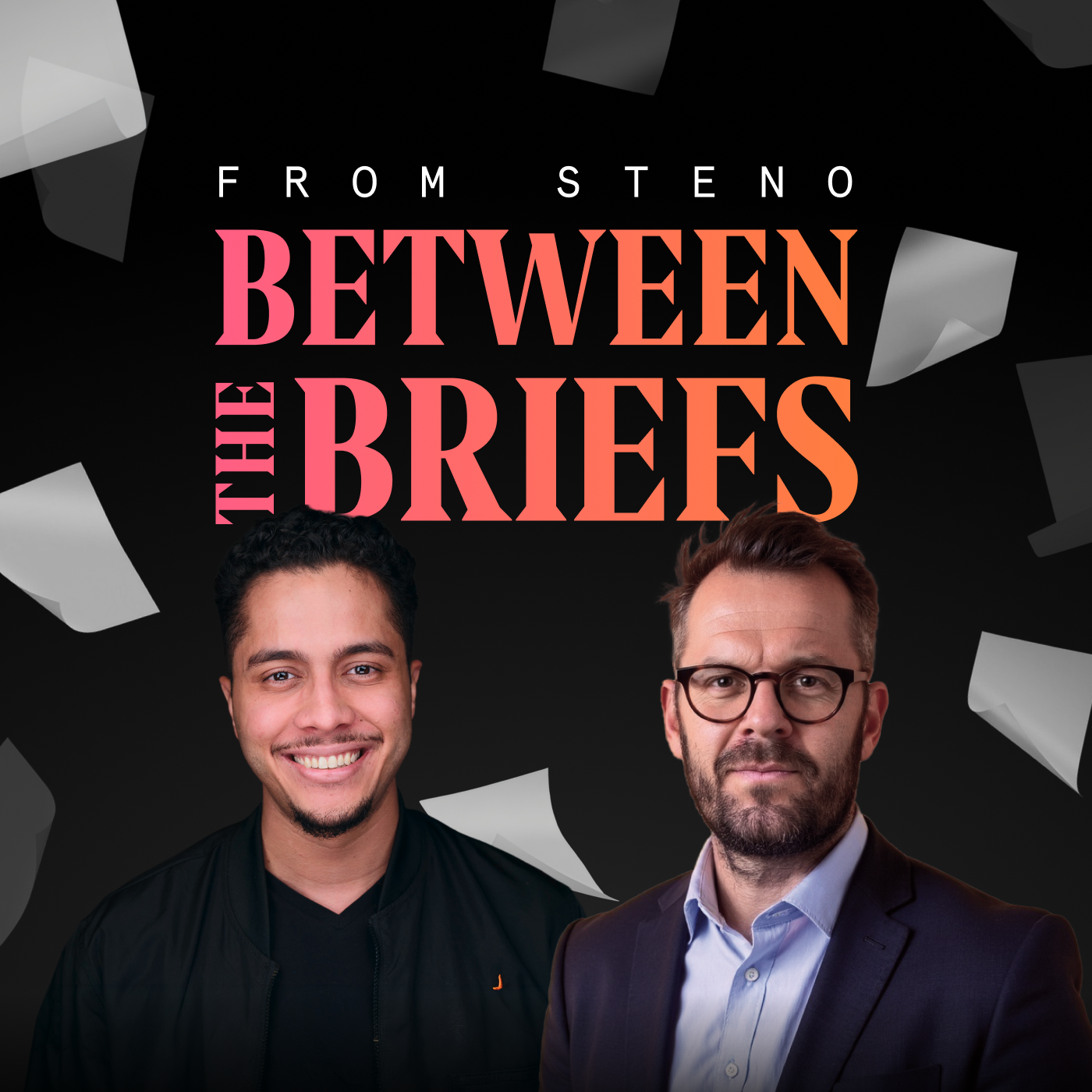
Has AI adoption in law already reached the point of questioning: how do we use it without creating tomorrow’s litigation risk? In this episode of Between the Briefs by Steno, Adrian Cea and Joe Stephens sit down with Shannon Boettjer, partner at Jaspan Schlesinger Narendran LLP, to unpack what responsible AI governance actually looks like for lawyers and law firms. Shannon breaks down why AI is no longer just one tool but an entire kitchen of systems, why hallucinations should be treated like common side effects and why firms need AI fluency, not just basic literacy, if they want to use these tools defensibly.
A few months ago, people were asking whether not using AI could ever be malpractice. Now, that question feels a lot less theoretical.
In this episode of Between the Briefs by Steno, Adrian Cea and Joe Stephens sit down with Shannon Boettjer, partner at Jaspan Schlesinger Narendran LLP, for a sharp, practical conversation on AI governance, legal risk, and what it means to build defensible systems before technology decisions turn into lawsuits.
What You’ll Learn:
- Why the AI conversation shifted from “should we use it?” to “how do we use it responsibly?”
- How the knife vs. kitchen analogy helps firms understand different levels of AI complexity
- Why AI governance should start with a risk-benefit analysis, not a checkbox list
- Why hallucinations are better understood as common side effects, not random surprises
- How “parallel from the start” can help firms avoid bad habits that compound at scale
- Why AI literacy is only the starting point, and AI fluency is the real goal
- Why lawyers need to understand the tools their teams, co-counsel, and vendors are using
- Why machines require a zero-trust approach, while humans require trust but verify
This episode is a clear-eyed look at legal AI adoption and the actual governance work required when lawyers start putting powerful tools into everyday practice.
Highlights:
00:00 Introduction
00:00 Introduction
01:19 Is It Malpractice Not to Use AI?
02:56 AI as a Tool: The Knife vs. Kitchen Analogy
05:04 Why Basic AI Skills Are Becoming Expected
07:17 Today’s Design Decisions Become Tomorrow’s Liability Theories
07:36 The Pharmaceutical Lens for AI Governance
09:40 Why EDRM Is an Underused AI Governance Framework
10:18 Choosing the Right Tool for the Right Pain Point
13:10 Why Human Review Still Matters
14:50 AI Literacy vs. AI Fluency
16:21 Lessons From Legal Week
16:43 Common Side Effects and Rare but Serious Risks
18:36 The “Parallel From the Start” Framework
20:16 Why “Grab It and Go” AI Adoption Creates Risk
20:47 The First Question Every AI Strategy Should Ask
23:51 Why End Users Need to Be in the AI Conversation
26:02 Data Governance, Privacy and Cybersecurity in AI Use
29:48 How Firms Should Assess Their AI Maturity
33:17 Why Old Technology Problems Keep Reappearing
37:17 Applying Existing Legal Duties to AI
38:03 Trust Humans, Zero Trust Machines
41:05 Where Legal AI Is Heading Next
47:18 The Cognitive Cost of Working With Machines
49:31 Shannon’s Hot Take: Personal Knowledge Management
52:02 The Swiss Cheese Problem in AI Governance
54:03 Closing Thoughts
Quotes:
- “AI is a tool, and I think of it in terms of something like a knife.”
- “Every layer of AI potentially solves a problem and potentially creates risks.”
- “Start with literacy with the end goal of being fluent.”
- “Trust but verify your human colleagues. I would hold a different standard for working with machines: zero trust.”
Between The Briefs is handcrafted by our friends over at: fame.so