You Believe Your Client But Can You Prove It? ft. Erica T. Healey-Kagan
November 6, 2026
Your client knows what happened. Their employer has a perfectly reasonable explanation. And now it's your job to prove which story holds up.
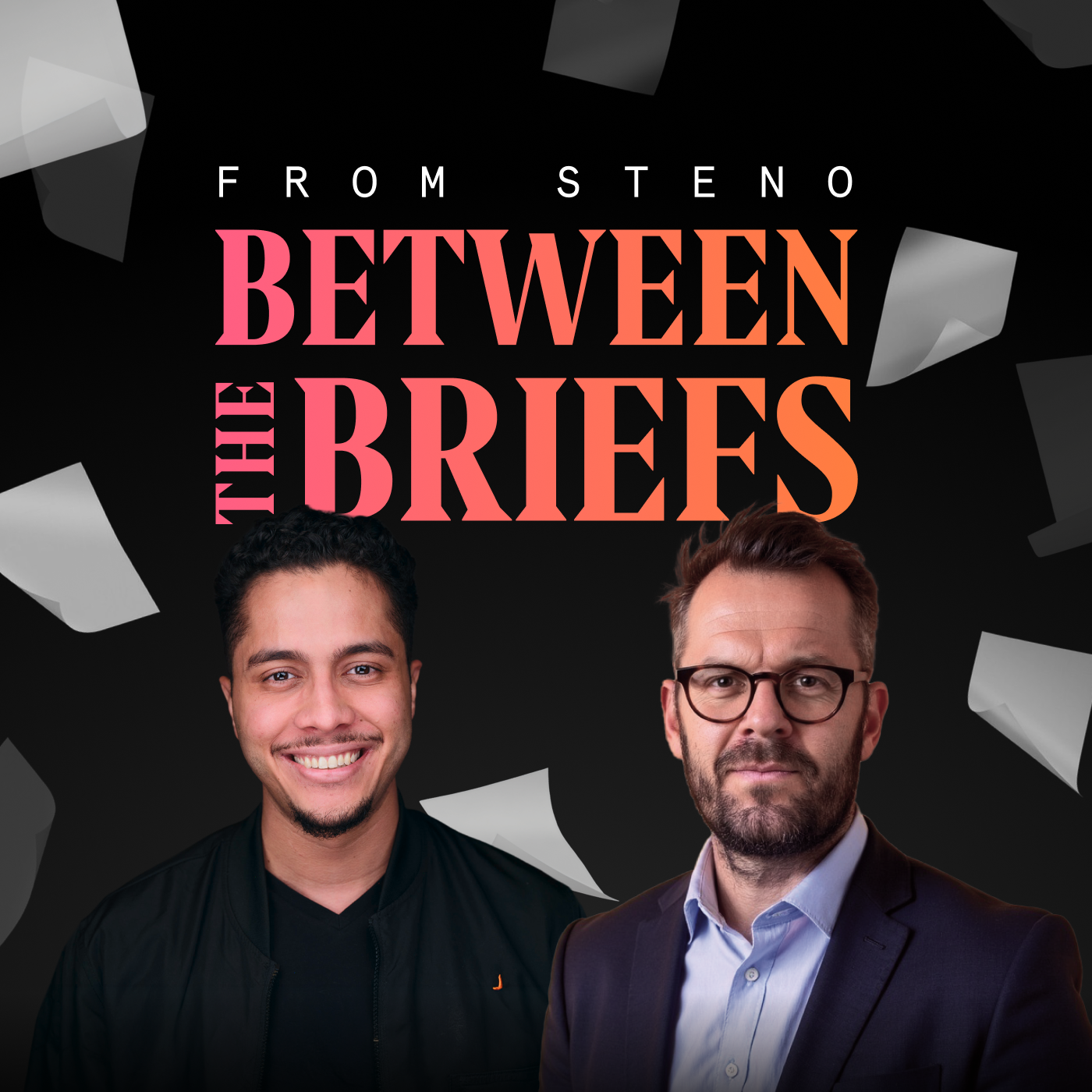
In this episode of Between the Briefs by Steno, Adrian Cea and Joe Stephens sit down with Erica T. Healey-Kagan, Managing Partner of the Manhattan office at Filippatos PLLC, to discuss the challenges of proving employment discrimination, building retaliation claims and securing evidence when there's no “smoking gun”. The conversation also brings up fascinating insights on the evolution of LGBTQ+ workplace protections, the complexities of negotiating confidentiality agreements and why helping clients reach a resolution sometimes means having difficult conversations about what justice can actually look like.
Believing your client is one thing. Proving what happened to them is a different battle entirely.
In this episode of Between the Briefs by Steno, Adrian Cea and Joe Stephens sit down with Erica T. Healey-Kagan, Managing Partner of the Manhattan office at Filippatos PLLC, to discuss what nearly two decades of employee-side advocacy have taught her about discrimination litigation, retaliation, evidence gathering, and the deeply personal nature of representing employees.
What You'll Learn:
- What proving employment discrimination really requires
- How documentation, timing and corroborating witnesses strengthen discrimination and retaliation cases
- Why attorneys need to examine changes in employee treatment after protected complaints
- How LGBTQ+ employment protections evolved from varying state and local laws to federal protection under Title VII
- How Erica's background in LGBTQ+ advocacy shaped her employee-side litigation practice
- Why remote work adds new complications when evaluating audio recordings and digital evidence
- What makes age discrimination particularly difficult to establish when employers cite legitimate business reasons
- How attorneys can investigate claims when critical evidence remains in the employer's possession
- How to manage client expectations when financial compensation cannot deliver every form of accountability they want
- How to maintain empathy and professional boundaries when handling emotionally difficult cases
- Where AI can help prospective clients prepare for legal consultations, and where it creates risks
When the client has a compelling story but the evidence is incomplete, how do you build a case that can stand up to scrutiny?
Highlights:
- 00:00 Meet Erica T. Healey-Kagan: Employment Litigation and LGBTQ+ Advocacy
- 01:02 How Erica Started Her Legal Career During the 2008 Recession
- 01:13 From LGBTQ+ Rights Advocacy to Employment Discrimination Litigation
- 02:25 Why Employment Lawyers Become a Trauma Response Team
- 02:55 The Emotional Reality of Representing Discrimination Clients
- 04:58 How Employment Protections Apply Across Different Industries
- 05:11 Representing Employees From Hourly Workers to C-Suite Executives
- 06:40 How Do Lawyers Counsel Clients Who Fear Retaliation?
- 06:58 The Warning Signs of Retaliation After an HR Complaint
- 09:44 What Evidence Makes an Employment Discrimination Case Stronger?
- 09:59 Why Documentation and Witnesses Can Make or Break a Case
- 13:04 How Have LGBTQ+ Workplace Protections Evolved?
- 13:21 The Shift From State-by-State LGBTQ+ Protections to Title VII
- 15:33 Has Remote Work Made Employment Litigation More Complicated?
- 15:50 Can Remote Meeting Recordings Be Used as Evidence?
- 18:06 Which Types of Workplace Discrimination Are Hardest to Prove?
- 18:35 Why Age Discrimination Cases Rarely Have a Smoking Gun
- 21:51 How Do Employment Litigators Investigate Workplace Discrimination?
- 22:06 Finding Witnesses When the Employer Controls the Evidence
- 23:59 Does a Financial Settlement Really Deliver Justice?
- 24:14 Why Winning a Discrimination Case May Not Give Clients Closure
- 27:16 Can AI Help Lawyers Build Employment Discrimination Cases?
- 27:28 How ChatGPT Is Changing Employment Law Client Intake
- 28:43 Can Confidentiality and Non-Disparagement Clauses Go Too Far?
- 28:58 Why Mutual Settlement Restrictions Can Protect Both Sides
- 31:24 What Should Lawyers Explain Before Clients Sign NDAs?
- 31:38 The Risks of Overlooking Confidentiality Restrictions in Severance Agreements
- 33:01 How Do Employment Lawyers Handle the Emotional Weight of Their Cases?
- 33:36 Why Attorneys Need Boundaries With Traumatized Clients
- 34:55 Erica's Work With the LGBT Bar Association of Greater New York
- 35:16 How LGBTQ+ Legal Organizations Support Future Lawyers and Communities
- 37:12 What Advice Does Erica Give Young Lawyers?
- 37:27 Why Early-Career Lawyers Should Explore Different Practice Areas
- 40:12 Erica's Hottest Take on the Legal Industry
- 40:21 Why Small Law Firms Can't Afford to Ignore AI
- 41:00 Closing Thoughts
Quotes:
- “We can't prevent a bad thing from happening, but we are here if it happens, and if it happens, it is illegal, and we will help you.”
- “It's very much one person's word against another.”
- “Even a judge will never require a company to terminate someone. It's just not going to happen.”
Between The Briefs is handcrafted by our friends over at: fame.so