Go Do Your Civic Duty: A Former Judge's Hottest Take ft. Brian Amero
October 2, 2026
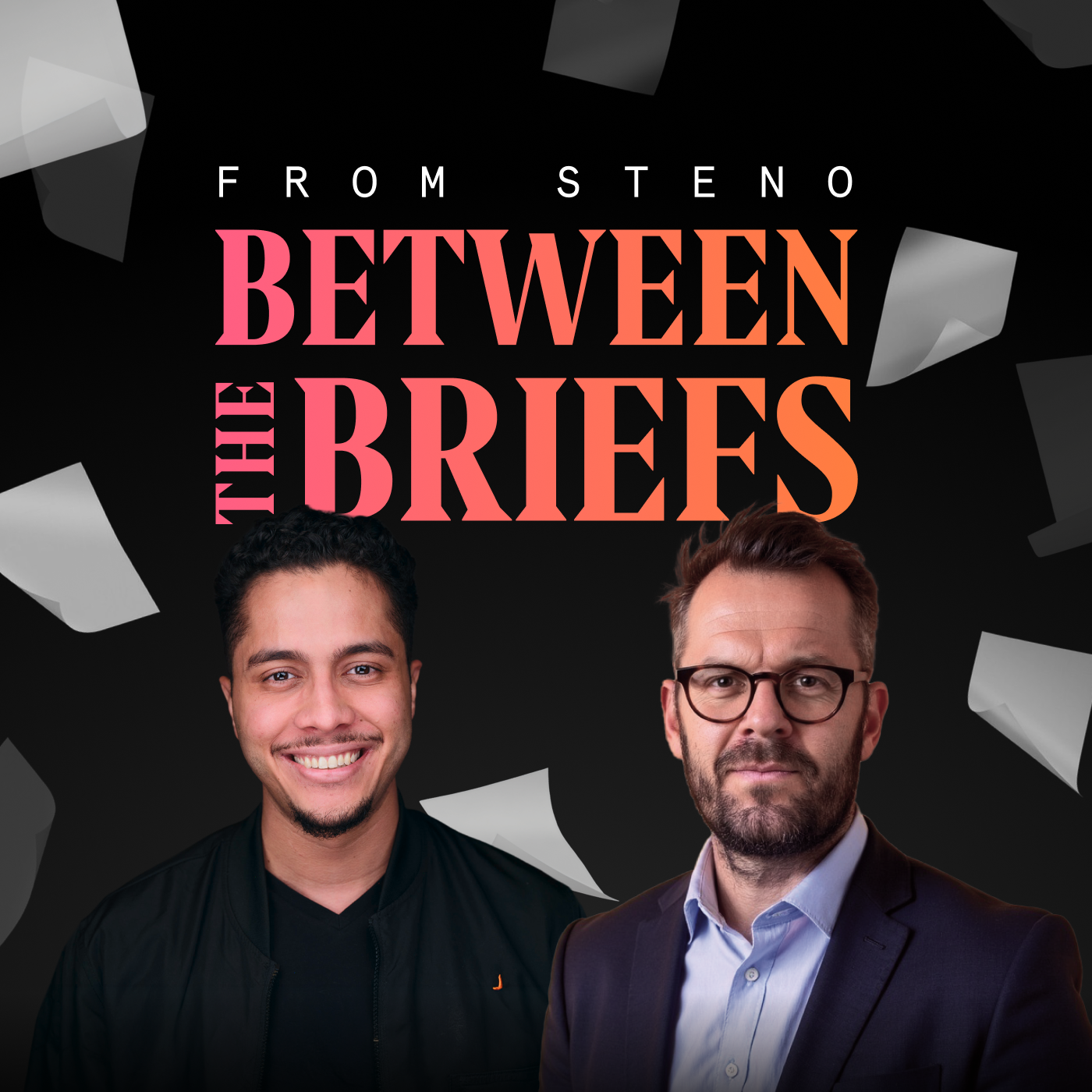
Judges can do more than rule on the cases in front of them, and Brian Amero spent nearly two decades on the bench proving it. From drug courts to a child support program that spread across Georgia, he looked for ways to make the system more humane and more effective.
In this episode of Between the Briefs by Steno, Adrian Cea and Joe Stephens sit down with Brian Amero, a former Chief Superior Court Judge in Georgia and Litigation Counsel at Bennett International Group, to talk about moving from prosecutor to judge, why people with severe mental illness spend so long in jail, how the civil and criminal systems can work together, and what it would take to get more people invested in fixing it. Brian also shares his hottest take on jury service.
Brian Amero became a naturalized American citizen in 2001. By 2007, he was an elected Superior Court judge in Georgia. Over nearly two decades on the bench, he set out to find better answers than incarceration for problems that jail was never going to solve.
In this episode of Between the Briefs by Steno, Adrian Cea and Joe Stephens sit down with Brian, a former Chief Superior Court Judge in Georgia and now Litigation Counsel at Bennett International Group, for a candid conversation about criminal justice reform, mental illness in local jails, access to justice and what a judge can do beyond the ruling. Brian explains why he brought drug courts to Henry County, how he built a parental accountability program that replaced automatic jail time for child support nonpayment with a path to steady work, and how that program eventually reached every judicial district in Georgia.
The conversation then turns to what Brian calls a human rights problem in our own backyards: people with severe and persistent mental illness who are incarcerated far too frequently. Brian walks through how a minor incident can turn into months behind bars while a defendant waits for a competency evaluation and restoration, why public defenders and prosecutors often overlook the civil-side resources that could help, and why he believes the civil and criminal systems need to be woven together. He and the hosts also discuss how to give judges, prosecutors and public defenders a reason to take this work on, why leadership at the top matters, and how a divided public can show up in the jury box.
And then there is Brian's hottest take: too many people are getting out of jury service, and the people trying hardest to avoid it are often the ones the system needs most.
What You'll Learn:
- How Brian's path from naturalized citizen to elected Superior Court judge shaped how he approached the job
- Why drug courts work as "courts of second chances" by addressing the underlying addiction instead of incarcerating people for it
- How the parental accountability program replaced jail time for child support nonpayment with case management, work requirements and a steady flow of support
- How a local program expanded to every judicial district in Georgia through conversations, budget requests and willing partners
- Why exercising prosecutorial discretion and exercising judicial discretion are not that different, according to Brian
- How a low-level incident can lead to months of incarceration for a person with severe mental illness before a competency evaluation even begins
- Why public defenders and prosecutors should be trained in mental health issues and the civil-side resources available to their clients
- Why Brian believes civil and criminal services should be woven together to manage mental illness in the justice system
- Why incentives, stipends and team-based approaches could help get judges, prosecutors and public defenders involved
- Why Brian thinks fixing this problem needs leadership at the state and national level, and better storytelling to make the public care
- How a politically divided community can show up in the jury box
- Why Brian thinks too many people are getting out of jury service
The big takeaway: Judges, lawyers and communities can build a more humane system, but it takes leadership, resources and people willing to give a little extra time to something that matters.
Quotes:
1. “Everybody in that system loses.”
2. “Judges want to do the right thing. They really want to engage in reforms that make their communities better.”
3. “This is like Kafka’s The Trial.”
4. “I consider this to be a human rights problem right in our own backyards.”
5. “Everybody wants to feel like they’re a part of something that they can be proud of.”
6. “Set everything aside, go do your civic duty.”
Between The Briefs is handcrafted by our friends over at: fame.so