The Third Golden Age of Software Engineering with Grady Booch (Part 1)
November 12, 2026
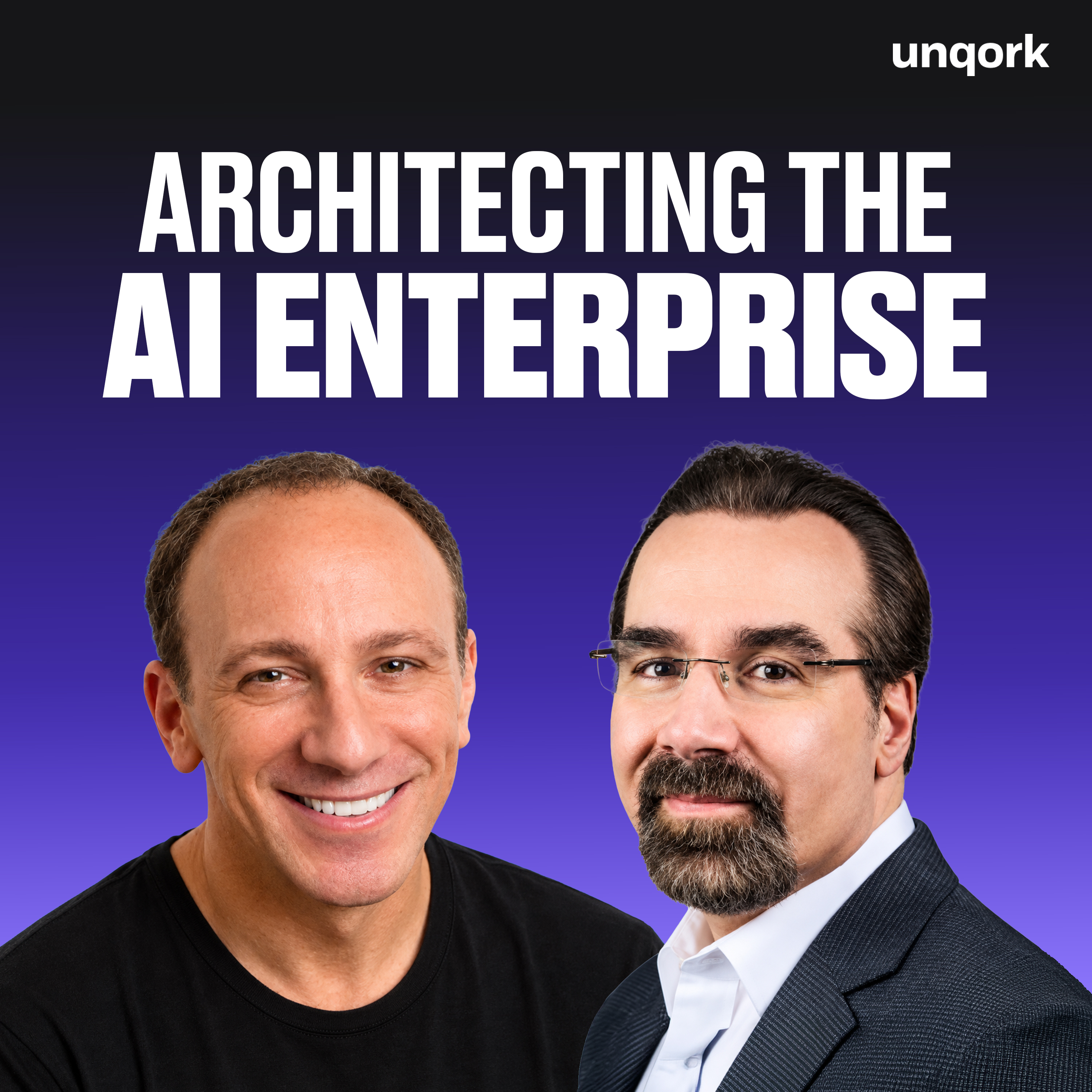
Coding agents aren’t the end of software engineering. They’re the next layer of abstraction. In Part 1 of our conversation on Architecting the AI Enterprise, we sit down with Grady Booch, Co-Creator of the Unified Modeling Language (UML) and former Chief Scientist for Software Engineering at IBM. We examine how today’s agentic harnesses—the software infrastructure and control layer that wraps around an LLM to turn it from a static text generator into a working AI agent—are transforming the IBM Watson pipeline, why natural language can’t replace formal systems with grounded semantics, and why vibe coding has no place in high-consequence architectures.
Coding agents aren’t the end of software engineering. They’re the next layer of abstraction. In Part 1 of our conversation on Architecting the AI Enterprise, we sit down with Grady Booch, Co-Creator of the Unified Modeling Language (UML) and former Chief Scientist for Software Engineering at IBM. We examine why today’s agentic harnesses are rebuilding the Watson pipeline, why natural language can’t replace formal systems with grounded semantics, and why vibe coding has no place in high-consequence architectures.
We revisit Watson’s generative, evidence-scoring pipeline, which Grady documented in UML after the Jeopardy! win, and compare its source-aware provenance with the LLM, RAG, and evaluation stacks enterprises are assembling today. Grady maps three golden ages of software engineering. We debate whether formal specification survives once classic programming fades, compare P(doom) estimates around the table, and land on where the real AI risk sits.
What You’ll Learn:
- How Watson’s generative, evidence-scoring pipeline anticipated today’s LLM, RAG, and evaluation stacks
- Why many agentic harnesses are reinventing pipeline architectures and established design patterns
- The three golden ages of software engineering, and why coding agents mark the start of the third
- Why the history of software engineering is a history of rising levels of abstraction
- Why formal systems with grounded, deterministic semantics won’t be displaced by natural language
- Where vibe coding fits in low-risk, disposable systems, and why it doesn’t belong in high-consequence ones
- Why the real AI risk lies in human misuse and concentrated power, not autonomous superintelligence
Grady Booch is a Scientist, Storyteller and Philosopher, Co-Creator of the Unified Modeling Language (UML), former Chief Scientist for Software Engineering at IBM, and one of the most influential figures in software architecture. He was a pioneer of object-oriented design and part of the design patterns movement, and he spent decades studying how complex, software-intensive systems are built and what makes them last. At Rational Software, Grady’s work shaped tools and methods used by a generation of engineers. Grady is also a historian of computing and is developing a documentary on computing in the spirit of Carl Sagan’s Cosmos.
Highlights and YouTube Chapters:
- 00:00 Welcome and Meet Grady Booch
- 01:35 Watson as a Generative, Evidence-Scoring Pipeline
- 04:43 Scientist, Storyteller, or Philosopher?
- 05:53 AI as a Philosophical Pursuit
- 07:47 Computing Is Younger Than Its Pioneers
- 08:36 What’s Your P(doom)?
- 11:00 Code Generation, Insecure Runtimes, and Unconstrained Agents
- 11:53 Enjoying Software While Deconstructing Its Architecture
- 14:44 Vibe Coding for an Audience of One
- 15:56 Are Coding Agents Replacing Software Engineers?
- 18:28 Formal Systems vs. Natural Language
- 20:37 Grace Hopper, Compilers, and High-Consequence Systems
Architecting the AI Enterprise is handcrafted by our friends over at: fame.so